
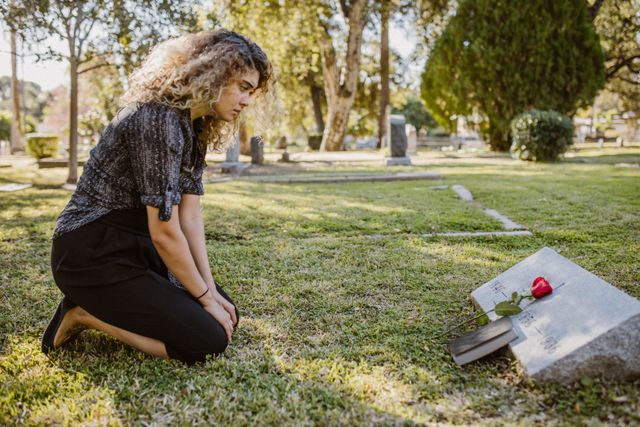
Death has puzzled humanity since the beginning of recorded thought. Every culture, religion, and philosophical tradition has tried to answer the same unsettling question: does anything of us survive when the body stops functioning? Some find comfort in faith, others in science, and many are left somewhere in between — curious, skeptical, and searching for something that feels both rational and meaningful.
Philip Sykes has spent years exploring this exact tension between science and spirituality. Rather than choosing one lens over the other, his work approaches death as a subject worthy of the same intellectual rigor applied to any scientific mystery, while still leaving room for wonder, testimony, and the unexplainable.
Why the Question of Death Refuses to Go Away
Unlike most philosophical questions, the question of death is not abstract. It touches everyone personally, often at the most painful moments of life — the loss of a parent, a partner, a friend. This universality is part of why theories about consciousness, the soul, and survival after death continue to resurface across centuries, cultures, and belief systems.
Modern science has added new dimensions to this ancient inquiry. Fields like quantum physics and consciousness studies have opened questions that were once purely religious, asking whether awareness itself might be more fundamental than matter, and whether it could exist independently of the brain.
Near-Death Experiences and What They Suggest
One of the most widely studied phenomena connected to this question is the near-death experience. Thousands of documented accounts describe similar patterns: a sense of leaving the body, moving through darkness or light, encountering deceased loved ones, and returning with a transformed perspective on life.
Skeptics argue these experiences can be explained by brain chemistry under extreme stress. Others point to the striking consistency of these accounts across unrelated cultures and eras as evidence that something more may be occurring. Neither explanation fully resolves the mystery, which is part of why the topic continues to attract serious inquiry rather than dismissal.
Ghosts, Hauntings, and the Limits of Explanation
Reports of ghosts and hauntings are often treated as folklore, yet they persist across every documented civilization. Some researchers suggest these phenomena may reflect residual energy or unresolved consciousness, while others see them as psychological projections shaped by grief, fear, or expectation.
What makes this subject compelling is not certainty, but the refusal of these experiences to disappear despite centuries of skepticism. Whether interpreted literally or symbolically, they raise questions about the boundaries of awareness that remain unanswered.
The Astral Plane and Layers of Reality
Many spiritual and philosophical traditions describe existence as layered, with a physical realm and one or more non-physical planes beyond it. These ideas, often called astral planes or transitional states, appear independently in mysticism, near-death testimony, and even some interpretations of theoretical physics.
While such concepts cannot be measured in a laboratory, their recurrence across unrelated traditions invites a closer look rather than automatic dismissal.
Does Belief in an Afterlife Change How We Live?
Regardless of where someone lands on these questions, engaging with them tends to shift perspective. Confronting mortality directly — rather than avoiding it — often leads people to reconsider what matters, how they spend their time, and how they treat the people around them.
This is explored in depth in Eternity, which walks readers through consciousness, the survival hypothesis, and the philosophical case for existence continuing beyond physical death, without demanding blind belief or forcing readers to reject scientific reasoning.
Holding Space for Mystery
Perhaps the most honest position on death is one that resists false certainty in either direction. Claiming to know exactly what happens after death is no more provable than claiming nothing happens at all. What remains valuable is the willingness to keep asking, to weigh evidence, testimony, and intuition together rather than dismissing any one source outright.
Final Thoughts
The question of what happens after death may never be definitively answered, but the inquiry itself has value. It pushes people to examine consciousness, meaning, and the fragile boundary between the known and the unknown. Whether approached through science, philosophy, or spirituality, the search for understanding what lies beyond life continues to shape how humanity makes sense of both death and life itself.



