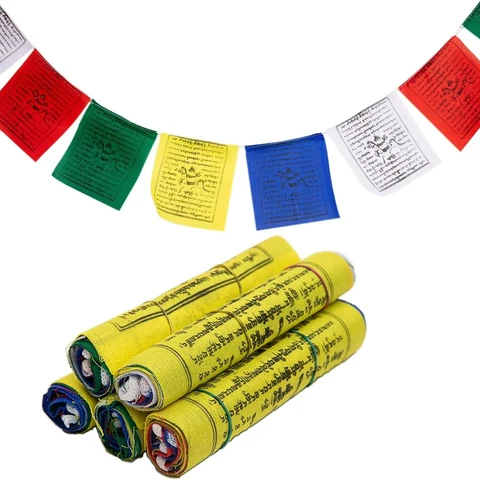
Walk the path around Boudhanath or climb toward a Himalayan pass and you will see them everywhere: rows of bright squares snapping in the wind against mountain light. To a visitor, they may look purely decorative. To the people who hang them, Buddhist flags are prayers made visible, carried by the air instead of spoken in a room. Every color, symbol and stitch has a purpose, and each flag begins as a piece of patient handwork. Here is what Nepalese prayer flags reveal about the artisans who make them, the beliefs behind them and the symbolism woven into every detail.
Faith Written on Fabric
Prayer flags come from the Tibetan Buddhist tradition and are widely used across Nepal’s Himalayan communities. The central idea is simple and generous. Mantras and blessings are printed on cloth, and as the wind moves through the fabric, it is said to carry good wishes, compassion and peace to all beings, not just to the person who hung them.
Two main forms exist. Horizontal flags, often called lung ta, are strung in a line between two points, such as rooftops, trees or poles. Vertical flags, often called dar cho, are mounted on a tall pole and stand like a banner. Both serve the same spiritual aim: to put blessings into the wind and into the landscape.
Five Colors, Five Elements
The colors are not chosen for beauty alone. A standard set contains five colors, each linked to an element, and they are traditionally arranged in a fixed order from left to right:
- Blue: sky and space, associated with wisdom.
- White: air and wind, associated with purity.
- Red: fire, associated with strength.
- Green: water, associated with harmony.
- Yellow: earth, associated with stability.
Together they express balance among the elements that make up the natural world and the human body. Hanging them in the proper sequence is a way of respecting that order, which is why practitioners care about getting it right.
Symbols and Mantras
Look closely at a flag, and you will find a dense design. At the center of many horizontal flags is the wind horse, or lung ta, a horse carrying a jewel on its back. It stands for good fortune, energy and the swift movement of blessings. Around it, in the four corners, you often find four dignified creatures: the garuda, dragon, tiger and snow lion, each representing a quality such as confidence, strength or fearlessness.
The surrounding space is filled with mantras, prayers and sacred syllables, often including the well-known Om Mani Padme Hum, associated with compassion. The result is a layered text-and-image design that rewards slow reading. Nothing on the flag is random.
The Craft Behind Each Flag
Behind every prayer flag is a skilled, physical process rooted in generations of craftsmanship. Artisans first carve designs in reverse into wooden blocks, requiring steady hands and a detailed understanding of sacred iconography. Even a small carving error can alter a mantra or symbolic element. The block is then inked and pressed onto cotton or similar fabric, with each colour applied separately. Once printed, the fabric is cut, trimmed and sewn onto cords or attached to poles.
This process reflects traditional Nepalese crafts, where technique, spiritual meaning and family knowledge remain closely connected. Many small workshops pass these skills through generations or apprenticeships. Selecting wholesale Nepalese prayer flags from artisan-led sources can help sustain this knowledge while preserving the subtle variations in printing and alignment that make handmade pieces distinctive.
Why the Flags Are Meant to Fade
New buyers are sometimes surprised that prayer flags are not meant to last forever. Sun, rain and wind gradually fade the colors and fray the edges, and this is considered a natural and even meaningful process. As the fabric weathers, the prayers are understood to be dispersing into the air.
For this reason, flags are usually hung outdoors in a high, clean place, and they are not washed or treated as decor to be preserved. When a flag is worn out, tradition calls for respectful retirement, such as burning, or replacement with a fresh set. Throwing them in the trash is considered disrespectful because the flags carry sacred text.
Hanging Them With Care
A few simple practices honor the tradition:
- Hang flags at a height, ideally above head level and never on the ground.
- Keep the color order consistent: blue, white, red, green, yellow.
- Choose an open, windy spot where the flags can move freely.
- Avoid stepping over them or placing them in untidy areas.
- Replace them when they have faded rather than leaving tattered remnants indefinitely.
Intention matters more than perfection, but small gestures of respect keep the practice meaningful.
Choosing Authentic Flags
Quality shows in the details: crisp printing, clear mantras, well-stitched edges and cloth that feels solid rather than flimsy. Ask where the flags were made and whether the sellers work directly with artisans. Transparent sourcing, fair pay and clear explanations of symbolism are signs that the maker and seller respect the tradition behind the product.
Conclusion
Nepalese prayer flags reveal a culture in which faith, art and daily life are woven together. Their colours map the elements, their symbols carry blessings, and their handmade process preserves skills passed down through generations. Even their fading carries a message about impermanence and generosity. For yoga studios, wellness centres and retailers that want authentic, ethically sourced stock, wholesale Nepalese prayer flags from artisan-led suppliers such as Himalayan Bazaar offer handcrafted products rooted in the cultural traditions of the Himalayan region, including prayer flags, singing bowls, tingsha bells and other traditional Nepalese crafts. Working with skilled artisans, the brand focuses on authentic materials, traditional techniques and responsible sourcing, helping preserve the cultural value and craftsmanship behind each product.