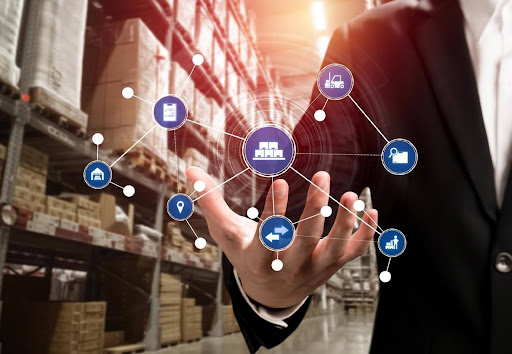
A supply chain can look efficient on paper yet struggle when money does not move as smoothly as goods. A manufacturer may receive a large order but need funds to purchase raw materials. A supplier may deliver products on time but wait weeks or months for payment. A distributor may have strong sales but face a temporary working capital gap. These situations show why supply chain Finance has become an important part of modern business operations.
Financing linked to the supply chain can help businesses manage these gaps while creating better coordination between buyers, suppliers, lenders, and other participants. When supported by digital technology, the process can become faster, more transparent, and easier to monitor.
Understanding Supply Chain Finance
Supply chain finance refers to financial arrangements that help businesses improve cash flow across commercial supply chains. Instead of looking at a company in isolation, these solutions consider the relationships between buyers and suppliers.
A common example involves a large buyer purchasing goods from a smaller supplier. The buyer may have a longer payment cycle, while the supplier may need cash much sooner. A financing arrangement can help the supplier access funds against an approved invoice, allowing the buyer to retain its agreed payment terms.
This creates a more balanced flow of working capital. The supplier receives earlier access to funds, while the buyer maintains its normal operating cycle.
The Cash Flow Gap Behind The Model
Cash flow timing is one of the biggest challenges in supply chain operations. Businesses often have to spend money before they receive money.
Consider a small component manufacturer supplying parts to a major automobile company. The manufacturer needs to purchase steel, pay employees, maintain machinery, and cover transportation costs. However, payment from the automobile company may arrive several weeks after delivery.
The manufacturer may be financially healthy but still experience pressure because money is temporarily locked in receivables.
Digital Platforms Change Financing
Traditional financing processes can involve extensive documentation, manual verification, multiple approval stages, and repeated communication between participants.
Digital platforms can simplify many of these activities by bringing transaction information, documentation, credit assessment, approvals, and monitoring into connected workflows. This is particularly valuable for supply chain Finance, where multiple participants need coordinated access to financial information.
This does not eliminate the need for proper credit assessment. Instead, it can help financial institutions make decisions with more structured and timely information.
Strengthening Supplier Liquidity
Smaller suppliers often experience greater working capital pressure than large buyers. They may have limited access to affordable financing and fewer options when receivables are delayed. Early payment mechanisms can provide an alternative source of liquidity.
Suppose a supplier has ₹20 lakh worth of approved invoices but expects payment after 60 days. If the supplier needs money immediately for a new production cycle, waiting may affect its ability to accept additional orders.
Access to financing against eligible receivables can release part of that locked value earlier. The supplier can then use the funds for inventory, wages, transportation, or other operating requirements.
The Role of Banks And NBFCs
Banks and NBFCs have an important role in making these financing models accessible at scale. Their challenge is to assess risk accurately while processing transactions efficiently.
Digital systems can support lenders by organizing information from different participants and creating structured workflows for onboarding, verification, credit decisions, disbursement, and repayment.
For financial institutions, this can create greater visibility into financed transactions. It can also help reduce dependence on disconnected manual processes. When information moves through a unified system, lenders can monitor exposure and identify potential issues more effectively.
Why Data Quality Matters
Digital financing depends heavily on accurate information. A platform may connect buyers, suppliers, lenders, invoices, transactions, and repayment records, but poor data can weaken the entire process. In supply chain finance, reliable information is essential for maintaining smooth and transparent workflows.
Incorrect invoice details can create delays. Duplicate records can increase operational risk. Incomplete customer information can complicate onboarding and credit assessment. Strong data management therefore becomes a core requirement.
Businesses and financial institutions need processes for validating information, controlling access, maintaining records, and identifying inconsistencies. Better data quality can improve both operational efficiency and lending decisions.
Managing Risk Across Connected Businesses
Supply chains involve multiple parties, which means financing risk can also become interconnected.
A lender may need to understand the financial position of a supplier, the reliability of a buyer, the authenticity of an invoice, and the nature of the underlying transaction. Technology can support risk management by providing better visibility into relationships and transaction activity.
Monitoring can also continue after financing is approved. Changes in payment behaviour, transaction volumes, overdue amounts, or other indicators may provide useful signals. This ongoing approach is more effective than treating credit assessment as a one time event.
Expanding Access For Smaller Enterprises
Small and medium businesses are a crucial part of many supply chains, yet they can face difficulties obtaining working capital.
Limited financial history, insufficient collateral, or lengthy lending procedures can restrict their financing options.
Supply chain linked financing can offer another route because the strength of a commercial relationship may provide useful context for evaluating the transaction. For growing enterprises, this can make access to working capital more closely connected to business operations.
The Indian Market And Its Potential
The development of supply chain finance in India is closely connected with the country’s expanding digital financial infrastructure and increasingly connected business ecosystem.
Indian businesses operate through complex networks involving manufacturers, wholesalers, distributors, retailers, logistics providers, and service partners. These relationships create significant opportunities for technology enabled financing.
The opportunity is substantial, but responsible implementation remains essential. Strong compliance, borrower protection, cybersecurity, consent based data use, and transparent pricing should remain central to the growth of these models.
Conclusion
A strong supply chain depends on more than the movement of physical products. Money must also move through the network at the right time.
As digital finance continues to develop, solutions that connect lending with real commercial activity can become increasingly relevant. Businesses and financial institutions exploring this opportunity can look to platforms such as Knight FinTech for technology driven approaches to modern financial operations.