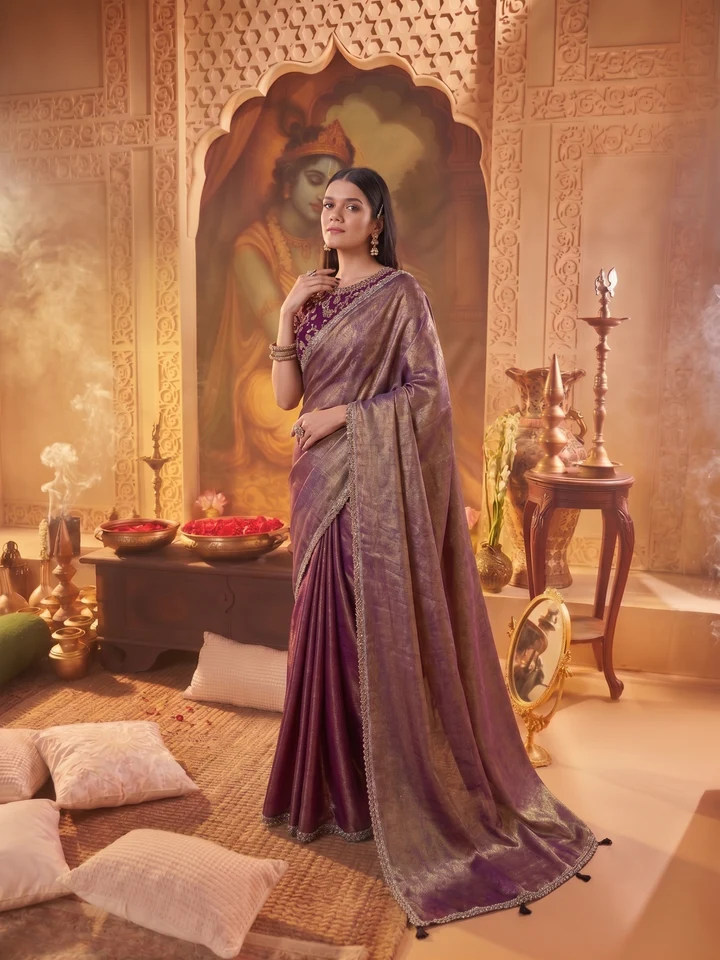
There is a particular kind of magic in watching someone drape a saree by hand, six yards of fabric folded, pleated, and tucked into place until it becomes a second skin. For travellers and expats discovering Indian culture in Europe, or for women returning to their roots after years abroad, the saree often feels like both an art form and a puzzle.
So when an invitation to a wedding, festival, or cultural evening arrives, one question inevitably follows: should it be a traditional hand-draped saree, or the far quicker ready made saree? The honest answer is that both have their place. The real skill lies in knowing which one suits which occasion, and that is exactly what this guide sets out to explore.
The Charm and Challenge of Traditional Draping
Traditional draping has been passed down through generations, region by region, each with its own signature style, the Nivi drape from Andhra Pradesh, the Bengali style with its broad pleats, or the elegant Gujarati seedha pallu. Learning to drape a saree the traditional way is almost a rite of passage, often taught by a mother, aunt, or grandmother.
The appeal is undeniable. A hand-draped saree moves differently, sits differently, and carries a certain grace that comes from fabric shaped entirely by hand. For grand occasions, weddings, engagement ceremonies, or classical dance performances, this level of detail often feels irreplaceable. It photographs beautifully, allows for personal styling choices, and lets the wearer add their own flourishes to the pleats or pallu.
But traditional draping asks for something not everyone has in abundance while travelling or living abroad: time, practice, and often, a second pair of hands. Getting the pleats even, keeping the pallu secure through a long evening, and adjusting for different fabric weights can be daunting for beginners, and even mildly stressful for seasoned wearers on a tight schedule.
Where the Ready-Made Saree Wins
This is precisely the gap that ready-made sarees were designed to close. A ready made saree comes pre-stitched or pre-pleated, so the wearer simply steps in, secures it, and is ready within minutes. For anyone juggling flight schedules, back-to-back events, or simply unfamiliar hands, this is a genuinely practical solution.
Ready-made sarees are particularly popular among:
- Travellers attending Indian weddings or festivals abroad who need a reliable, no-fuss outfit.
- Young professionals who want the elegance of a saree without the learning curve.
- First-time saree wearers who are nervous about pleating and pinning.
- Anyone attending back-to-back events where changing quickly matters.
The trade-off is minor rather than dramatic. Because the pleats are fixed, there is slightly less room for personal customisation compared with a hand-draped saree. But the finish is neat, the silhouette is flattering, and the confidence that comes from not worrying about a slipping pallu is, for many wearers, worth every bit of that trade-off.
Matching the Drape to the Occasion
Rather than deciding between traditional and ready-made sarees based only on personal preference, consider what the occasion demands. Different events call for different levels of formality, comfort, and ease of movement.
- Weddings and religious ceremonies: Traditional draping can be an excellent choice when the occasion is formal and there is enough time to arrange the pleats and pallu properly. With someone available to help, the hand-draped style adds a personal and elegant touch to the overall look.
- Festivals, cultural events, and daytime functions: Ready-made sarees are often more practical for events that involve travelling, walking, or spending several hours away from home. Their structured pleats help maintain a neat appearance while making movement easier.
- Office parties, brunches, and casual gatherings: A ready-made saree can work particularly well for less formal occasions. It takes little time to wear, stays in place throughout the event, and offers the polished appearance of a traditional saree without the effort of arranging every pleat by hand.
A Traditional Choice for Young Girls and Teenagers
For young girls and teenagers, a half saree offers another way to experience traditional Indian dressing. Commonly worn for festivals, family celebrations, and coming-of-age occasions, this South Indian outfit combines a long skirt, a fitted blouse, and a separate dupatta or scarf draped across the body. It provides the traditional appeal of saree-inspired clothing while allowing younger wearers greater comfort and freedom of movement.
For families living in Europe, finding authentic half sarees in suitable sizes, colours, and designs can sometimes be challenging. A dedicated half saree online shop in Germany can make the search more convenient, giving families access to traditional styles without the difficulty of arranging purchases directly from India.
This is also where brands with strong connections to Indian craftsmanship and a presence in Europe can be valuable.
In Conclusion
Ultimately, selecting between a ready-made saree and traditional draping comes down to the occasion, comfort, and time available. Traditional draping brings craftsmanship, personal styling, and a sense of ceremony, making it well suited to weddings and formal celebrations. Ready-made sarees, meanwhile, offer practicality without sacrificing the elegance of Indian attire, making them especially useful for travel, casual events, and first-time wearers. For younger girls, a half saree provides another culturally rooted option that combines traditional style with comfort, and families looking for suitable designs can explore a half saree online shop in Germany for convenient access to traditional choices. The key is not to choose one style over the other, but to select what works best for the moment and the wearer.
For families in Germany, Riwaaz makes exploring Indian ethnic wear more convenient, offering traditional and ready-to-wear options for different occasions. Its collection includes sarees, half sarees, and festive outfits, helping customers find culturally rooted attire for weddings, festivals, celebrations, and family gatherings.